
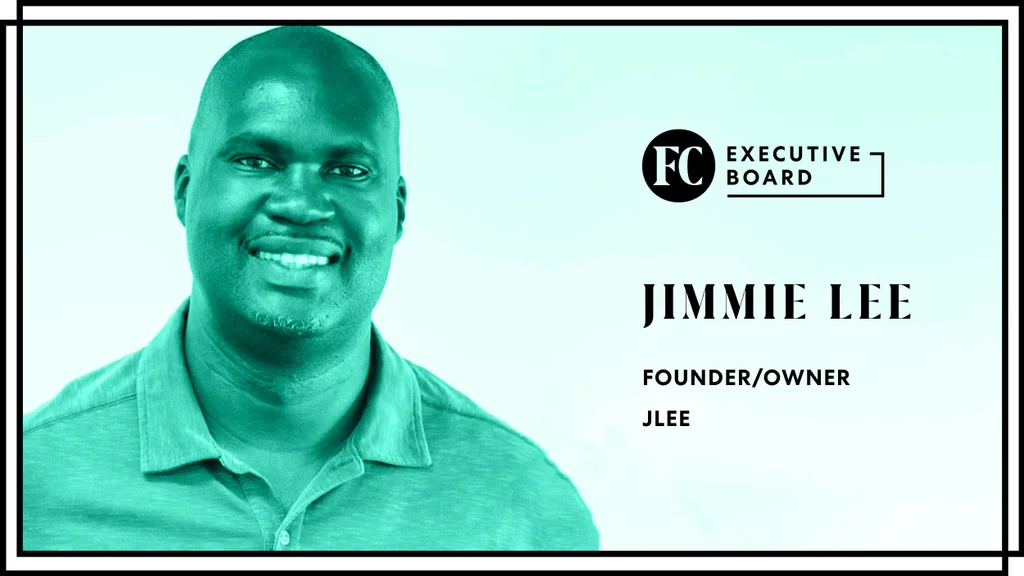

It’s human nature to follow trends and patterns. Not coincidentally, many businesses do the same. But true innovation requires thinking in new directions to differentiate your business and connect to users in ways they have never imagined, says Jimmie Lee of JLEE & Associates. “To achieve this, we need to take a close look at something I call talent-product fit, a concept I’ve come to deeply appreciate in the context of innovation and business success,” he says.
CULTIVATING A CULTURE OF INNOVATION
The idea of talent-product fit goes beyond the traditional notion of product-market fit, which only focuses on the alignment between a product and its market demand. In contrast, Lee says, talent-product fit means bringing a collection of people together and leading them into a process of forming a team culture that prioritizes disruptive thinking and risk-taking. “By doing this, you create a team that becomes resilient in the face of the challenge and persistent through interactions of fail-to-success cycles.”
Talent-product fit involves assembling a team whose members have the necessary technical skills, but in Lee’s experience it’s more than just that. “Team members also possess a deep understanding of your target users and their contexts,” he says. This understanding is especially important when businesses are aiming for global scalability, as it requires insights into diverse cultures and environments.
Talent-product fit also isn’t just about filling roles with competent people. It’s about finding employees whose unique skills, experiences, and ways of thinking align closely with the innovative goals of your product. “If you do it right, you’ll find your team is actively contributing to the evolution and success of the product in a way that truly innovates and resonates with its intended market,” Lee says.
HIRING FOR CORE TALENT
Too often, candidates are hired for their deep specialization and skillsets. That works well in an enterprise where employees are given very defined roles and clear lanes in which they must stay. “But if companies are looking to make a greater disruptive impact, they should look for core, natural abilities and prioritize them over specialized skills,” Lee says. Technical skills can be taught, he adds, but core talents such as creativity, critical thinking, and a passion for learning are inherent, and are powerful drivers of innovation and progress.
Lee emphasizes that this strategic approach to recruitment must focus on identifying candidates with fundamental skills and innate abilities that align closely with a company’s core needs and values. “It means evaluating candidates more deeply and looking into their experiences, thought processes, and how they approach challenges, rather than just their resumes,” he says. It’s important to pay special attention to diverse thoughts and experience, and to keep in mind that a mix of backgrounds and perspectives can boost teams’ problem-solving and creativity.
FOSTERING UNCONVENTIONAL TALENTS
Lee considers the concept of talent-product fit to be a crucial catalyst in the pursuit of disruptive innovation. “It transcends the traditional focus on individual expertise, emphasizing the collective strength of a well-composed team over single ‘rock star’ employees,” he says.
To make this happen, leaders need to recognize that diversity not only enriches a product but is essential for its success. “The frequent failure of startups and businesses can often be traced back to a lack of awareness and access to the right tools,” Lee says, “with too much emphasis put on resumes that might have the right keywords but don’t capture the true potential of candidates. We need to look for people who may not tick conventional boxes but still bring invaluable contributions.”
That’s what talent-product fit is all about: finding a person who has the capacity to do far more than a manager could ever ask of them. “By prioritizing people and their latent abilities, we can foster teams that not only meet current demands but are equipped to navigate and shape the future,” Lee says. “It is and always has been about the people.”