

Two years into the global wave of AI acceleration, one thing is clear: Across every major sector, AI is reshaping how organizations operate, compete, and create value. But the path forward looks very different depending on where a company starts from and what kind of problems its leaders are trying to solve.
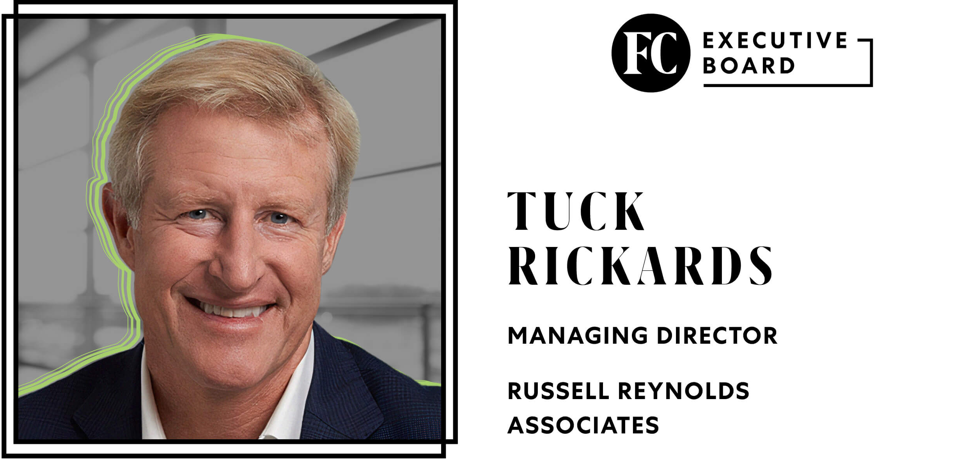
This is the second phase of the AI leadership journey, says Tuck Rickards, managing director for Russell Reynolds Associates’ Global Technology Practice. “The initial hype cycle has given way to execution, yet even now, many CEOs are struggling to find direction amid the noise,” Rickards says.
There has been no shortage of analysis, from a recent BCG report showing clear ROI among early adopters to MIT’s findings that most organizations are not yet realizing returns. This disconnect highlights how CEOs lack a systems view of the ways AI is changing the fundamentals of their business. Seeing that picture demands courage and foresight, and for many leaders approaching the latter years of their tenure, taking such a leap still feels daunting, Rickards says.
The organizations making the greatest progress are led by CEOs who move beyond that hesitation, combining clear strategic intent, personal commitment, and a disciplined approach to building the capabilities their future requires.
THE NEXT CHAPTER: PLAYING OUT DIFFERENTLY BY SECTOR
AI transformation is playing out differently in different industries, reflecting unique legacy systems, regulatory constraints, and strategic ambitions.
In banking, AI has become a structural enabler of productivity and risk management. Leaders are embedding AI across core functions, from credit assessment to compliance and client service, to create smarter, faster, and more personalized experiences. At JPMorgan Chase, for example, CEO Jamie Dimon has prioritized technology investment as a source of long-term advantage, dedicating $15 billion to $18 billion annually to technology, with AI at the heart of that strategy. The payoff includes measurable productivity and efficiency gains across trading and software development.
In healthcare, leaders are using AI to tackle systemic complexity and accelerate innovation. Companies like Eli Lilly and Pfizer are reimagining drug discovery, leveraging AI to compress research cycles and identify new molecules faster than ever before.
In technology and industrials, the challenge is less about adoption and more about integration and scaling. IBM offers a striking example. Having pioneered enterprise AI through Watson, the company has repositioned itself around foundation models and generative AI services that can be deployed securely within complex organizations.
Each of these sectors is at a different stage of maturity, Rickards says, but the pattern is consistent: “The organizations moving fastest see AI as a strategic operating system that redefines how the enterprise thinks, learns, and competes.”
WHAT’S CONSISTENT: LEADERSHIP PATTERNS THAT DEFINE PROGRESS
Despite the sector differences, the CEOs making real progress share a common set of behaviors and beliefs. Across industries, several themes are emerging.
First, every meaningful transformation begins with a leader who sees AI as integral to the business model. These CEOs have a clear view of what AI enables in their specific context, whether that’s a bank transforming risk analysis or a healthcare company accelerating scientific discovery.
They also possess the resolve to act before the outcomes are guaranteed. “This is the moment where leadership courage defines future success: the willingness to take a risk with your legacy to reimagine the organization,” Rickards says. The CEOs who are advancing most quickly do so because they have a strong point of view about where the world is heading—and they lead their teams decisively toward it.
RE-ARCHITECTING LEADERSHIP AND CAPABILITIES
Behind every visible AI initiative lies an invisible layer of transformation: the re-architecture of leadership teams, structures, and skills.
Organizations making the greatest progress are focused on three consistent elements. First, modern data and technology foundations enable real-time insight and experimentation. A reimagined C-suite lets technology, operations, finance, and HR leaders work as one system rather than in silos. Finally, new workflows and decision models make AI and data part of everyday management.
“This is about augmenting leadership capacity, freeing executives and teams to focus on creativity, innovation, and strategic judgment,” Rickards says.
CULTURE AND COLLABORATION AS CATALYSTS
The most effective leaders are reframing culture as a strategic lever for transformation. They are modeling curiosity, openness to experimentation, and a willingness to learn alongside their teams.
In this phase, collaboration between the CEO, the board, and the executive team is critical. The best boards are now treating AI fluency as a leadership capability, ensuring that succession planning and governance processes align with the company’s transformation agenda.
Russell Reynolds Associates’ work with CEOs and boards shows that those who connect culture, collaboration, and execution discipline are the ones building lasting advantage, Rickards says: “This new generation of leaders sees AI as a mindset to embed, one that touches every function, decision, and role.”
THE ROAD AHEAD: TWO YEARS IN
Two years into this era of accelerated change, the lesson is clear: AI transformation is not a uniform journey, but the leadership playbook for success is remarkably consistent.
The sectors may differ. The technologies may evolve. But the leaders who are moving fastest share a common DNA: They have a clear direction, the courage to make difficult calls early, and the discipline to build the organizational muscle that sustains change.
As Rickards puts it, this remains “a moment of choice for CEOs.” Those who act now will define the next decade of competitive advantage.